
June 21, 2026
Can You Swim With Engagement Rings Safely?
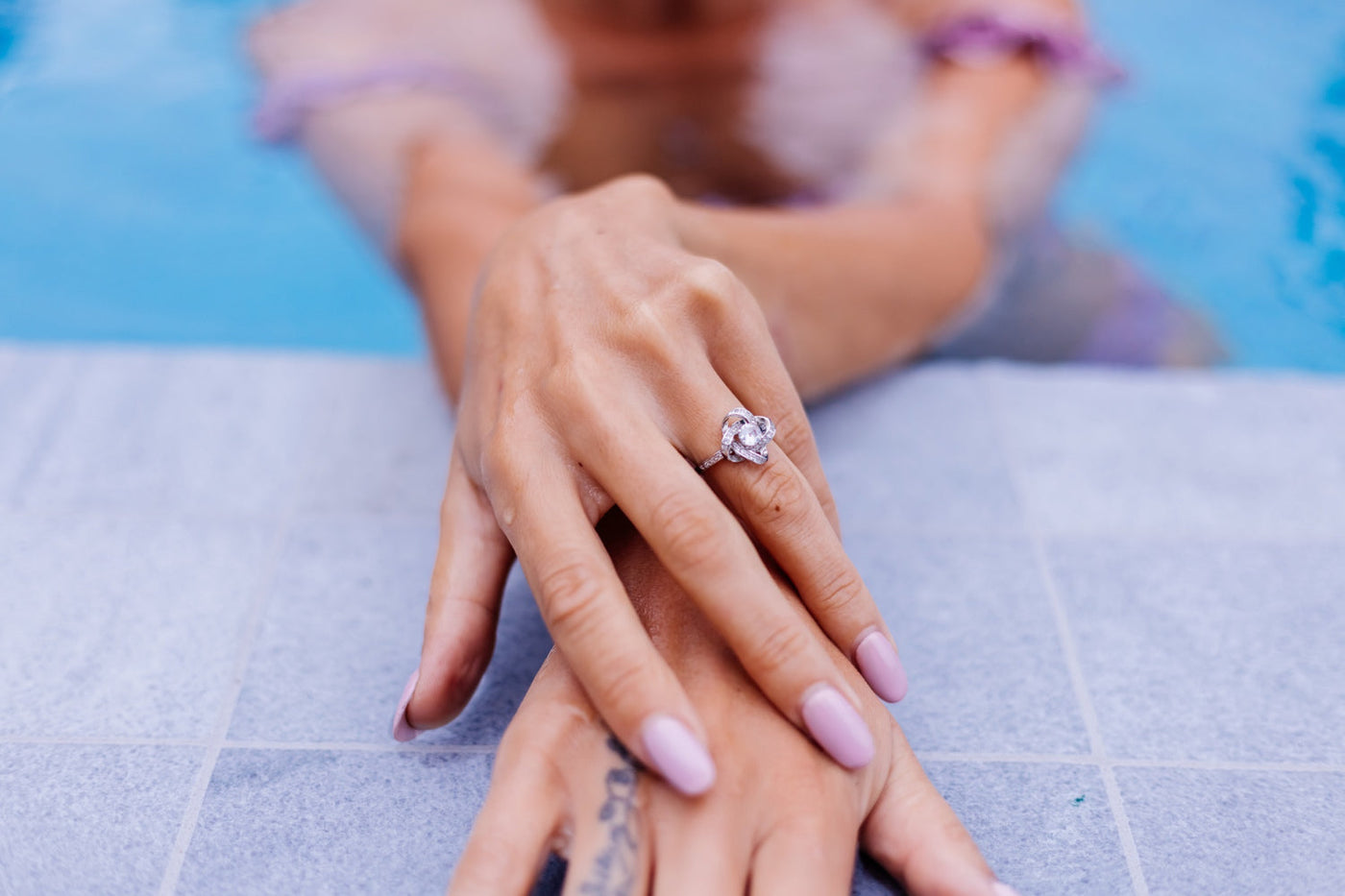
Hot weather brings out the best parts of summer: days by the pool, weekends at the lake, and beach escapes with plenty of sunshine. But if you have jewelry on your mind, especially something as meaningful as an engagement ring, there is something else you might be thinking through. Should you swim with it, or leave it behind?
We get that question a lot. Engagement rings are sentimental and often expensive, so it is only natural to want to protect them. Swimming does not seem like a big risk at first, but water, chemicals, and everything else that comes with outdoor fun can quietly take a toll. If you are wondering what is actually safe and when it makes sense to pause on wearing your ring, here are some clear breakdowns to help you decide.
Chlorine, Saltwater, and Pool Chemicals: What They Do to Rings
Different types of water bring different risks to a ring. While swimming might feel harmless in the moment, repeated contact with chemicals or salt can quietly wear down more than just shine.
- Chlorine, especially from pools and hot tubs, can react with metals like white gold. It can cause surface dullness or a color shift over time.
- Rose gold can lose its warm finish more quickly when exposed to pool water regularly.
- Saltwater can also create issues, especially with micro settings. Salt buildup can slowly wear down prongs or work into the edges of pavé details.
- Even the cleaner-seeming water in hotel pools or hot tubs often carries extra chemicals that can weaken a ring’s structure with repeated exposure.
After just a few dips, you might not notice much. But over time, these effects add up. If you swim often, that wear might show up sooner than expected.
Risks of Slipping Off: How Water Affects Ring Fit
Even tighter rings can feel loose in cold water. Our hands shrink a bit when they are swimming or just hanging out in cooler temps, which means rings do not stay put as well as usual.
- Cold water causes fingers to temporarily contract, which makes rings easier to slip off without realizing.
- Sunscreen or water play can leave hands slick. A slight nudge or wave motion could slide the ring off before you even feel it.
- Many people lose rings during summer simply because they did not feel them fall. From paddleboarding to cooling off in a river, it just takes a second.
This happens more often than people admit. It is easy to assume a ring feels secure until the movement of the water makes that assumption wrong. And once it is gone in a lake, ocean, or deep pool, it is probably not coming back.
Scratches, Sand, and Impact: Not Just a Water Problem
Swimming is not just about being in the water. Beaches, boats, and pool decks all play a role too. Most of those surfaces do not mix well with rings.
- Fine sand can scratch band surfaces and sneak into stone settings. It acts kind of like an abrasive, slowly dulling polish finishes.
- Knocking a ring against pool edges, piers, or other hard features can loosen prongs over time or even chip a stone.
- Sunscreens, oils, and beach lotions cling to jewelry. They leave a sticky residue under stones and between tiny design details, which collect dirt and can be hard to clean out fully.
Even with durable rings, a few summers of this kind of wear and tear can lead to unexpected repair needs. It is not always about losing the ring. Sometimes, it is just that it starts looking worn before its time.
Temporary Ring Alternatives and Safe Storage Options
You do not have to wear your main ring everywhere. For certain outings, it makes sense to swap for something else or give your ring a short break.
- Silicone bands are a smart option if you want to wear a placeholder while at the beach or on the water. They are easy to find and feel pretty natural.
- A padded travel case with a secure zipper or hidden pocket is great if you want to bring your ring but not wear it during the activity.
- Lockers, zipped interior bags, or secure hotel safes work well when you plan ahead and want peace of mind without keeping the ring on all day.
Leaving a ring behind for a few hours, or swapping for something simpler, can feel like the safest route on days with lots of swimming, hiking, or other hands-on movement.
When You Just Do Not Want to Take It Off
We understand if you would rather keep your ring on. Some people never want to remove theirs, and that is valid too. Still, there are simple habits that can help reduce the risk of wear or loss.
- Rinse and wash your hands before and after swimming if you can. This helps remove sunscreen, oils, and sand.
- Use protective gloves while boating or helping with gear around sharp edges.
- Give your ring a quick check for loose stones or weakened prongs after long days outside, especially if it took a few bumps.
Wearing your ring with care does not mean giving up freedom or summer fun. It just means thinking through a few extra steps and building small habits that protect it longer term.
Keep Your Favorite Ring Safe Without Missing the Summer Fun
Engagement rings mean a lot, and we all want to keep them looking and feeling just right. The thing is, summer does not have to get in the way of that. Sunny weather, weekend fun, lakeside cookouts, none of it has to compete with the safety of your ring. When you know what to watch out for, it gets easier to make small choices that go a long way.
Whether you take your ring off for the water or find ways to wear it more carefully, a little preparation keeps it with you for the long haul. We hope you enjoy the season without the stress and with all the sparkle you want.
As you enjoy sunny days and beachside adventures, remember that protecting your cherished piece doesn't mean compromising on joy. At John Thomas Jewelers, we understand the significance of custom jewelry that resonates with your lifestyle. Our designs combine timeless beauty with practical durability, ensuring you can celebrate every summer moment with confidence. Let's work together to create a ring that's perfect for both daily wear and special occasions.